 MassPlanner
Every founder envisions a triumphant launch day. You spend months refining code, polishing copy, and stress-testing infrastructure. On release morning, you publish on Product Hunt, post across social networks, and watch traffic spike as upvotes roll in. Notifications chime constantly, creating the thrilling sensation that your product has arrived.
Then Day Three hits. The initial surge evaporates, referral visits drop sharply, and active sessions flatline. This rapid drop-off is the classic trap of modern releases. Treating launch day as a one-time publicity stunt earns a brief burst of attention that vanishes before converting into paying users. To build lasting momentum, replace the single-day sprint with an ongoing flywheel that coordinates social excitement before, during, and after release day.
Why Most Launch Day Traffic Vanishes After 48 Hours
Traditional launch marketing fails because it relies on temporary curiosity rather than compounding engagement. Most teams treat launch day as the finish line, hoarding every feature announcement for a single high-stakes moment. However, audience attention is deeply fragmented across distinct networks. According to data on multi-platform user distribution, user habits differ sharply depending on whether people browse technical forums, watch vertical video feeds, or read professional updates.
When you dump raw product links across several platforms at once, recommendation algorithms actively suppress your reach. Platforms reward native content that retains users within their feeds. An account that suddenly broadcasts outbound links without prior conversational context gets downranked immediately. Your post reaches a tiny fraction of your target audience, and within forty-eight hours, its algorithmic lifespan ends.
A multi-channel launch flywheel fixes this vulnerability by turning distribution into three connected phases:
- Phase 1 (Pre-Launch Teasers): Validating core messaging hooks and building an active waitlist weeks before public release.
- Phase 2 (Launch-Day Amplification): Orchestrating a synchronized, native content blitz that triggers early engagement signals.
- Phase 3 (Post-Launch Case Studies): Converting early user feedback and customer wins into public social proof that fuels ongoing referral traffic.

Phase 1: Build Quiet Curiosity Two Weeks Before Launch Day
A successful launch never starts on launch morning. If prospective users discover your product only when you ask for signups, conversion rates suffer. The pre-launch phase builds quiet curiosity by unpacking the problem space, documenting technical hurdles, and proving you understand your audience’s daily friction.
Tailoring Teasers Across Four Networks
Avoid pasting identical teasers across different platforms. Each social ecosystem has its own culture and content preferences. As outlined in proven frameworks for multi-channel content promotion, your message must fit the specific channel where prospective buyers already spend their time:
- X (formerly Twitter): Share transparent build-in-public snippets. Post screenshots of discarded UI prototypes, concise architecture diagrams, and short screen recordings showing your tool eliminating a painful bottleneck.
- LinkedIn: Frame content around operational efficiency and industry trends. Write narrative posts detailing the measurable cost of manual workflows, inviting industry peers to share how their teams solve those problems.
- TikTok: Produce punchy vertical videos highlighting relatable workplace frustrations. Show an engineer struggling through a tedious manual task, followed by a three-second demonstration of your streamlined fix.
- Reddit: Participate constructively in niche communities like r/SaaS or r/startups. Answer technical questions, provide objective advice, and seek feedback on specific mechanics without dropping unsolicited sales links.
Turning Curiosity into an Active Waiting List
While distributing these teasers, direct interested prospects toward a focused waitlist landing page promising early beta access. To establish additional authority before launch day arrives, consult our software directories and product launch visibility guide to ensure your software is properly cataloged across relevant industry registries.
Protect Your Main Brand by Using Satellite Accounts for Early Reach
When testing aggressive outreach, growth teams frequently worry about brand reputation. What happens if an experimental video hook falls flat, or testing multiple variations triggers platform rate limits?
Separating Discovery Risk from Brand Equity
You can solve this dilemma by separating discovery risk from brand equity. Your primary company profile and founder handles carry hard-earned industry trust and customer relationships. You should never risk that reputation on speculative, high-volume creative experiments. Instead, deploy disposable satellite accounts built specifically to test experimental messaging in the wild.
Satellite profiles are specialized secondary accounts created to explore targeted sub-niches, creative formats, and industry conversations. Instead of publishing ten speculative video concepts to your main brand handle, you distribute them across two satellite accounts dedicated to daily software tips or industry commentary. These satellite accounts provide vital strategic advantages:
- They test bold video hooks, humorous memes, and niche discussions without cluttering your core brand feed.
- They absorb algorithmic penalties and rate limits if a high-volume testing cadence encounters platform restrictions.
- They identify exactly which messaging angles deliver high click-through rates before you feature them on your primary profile.
How to Safely Funnel Traffic to Your Primary Profile
Satellite accounts should never exist as dead ends. When a satellite post gains organic traction, funnel qualified users back to your main brand. Pin informative quote-reposts of your primary brand’s flagship announcements, tag founder profiles in contextual discussions, and keep clean bio links directing visitors to your primary landing page. This structure creates a secure buffer: satellite accounts absorb experimental risk while your primary brand gains qualified subscribers.
Phase 2: Coordinate Your Launch Day Push Across Every Channel
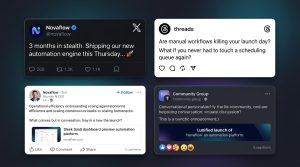
Launch day requires precision timing. Publishing all your content in an unorganized morning rush wastes valuable reach. Instead, orchestrate an hour-by-hour rollout that captures different time zones and keeps feeds active throughout the entire business day.
Executing an Hour-by-Hour Rollout
Structure your publishing schedule across key platforms to maintain steady visibility:
- 08:00 AM (The Core Announcement): Publish your primary announcement thread on X and a narrative post on LinkedIn. Focus squarely on the core problem: what is broken in the market, why existing workarounds fail, and how your product delivers a superior alternative.
- 10:30 AM (The Demonstration Push): Roll out fast-paced product demonstration clips on TikTok and YouTube Shorts, showing the interface solving the core problem within seconds.
- 01:00 PM (The Community Discussion): Host an open technical discussion or Ask-Me-Anything thread on Reddit. Share transparent metrics from your morning launch, outline your architecture, and invite direct feedback from technical peers.
- 04:00 PM (The Mid-Day Milestone): Share a mid-afternoon progress update highlighting community feedback, interesting early use cases, or humorous engineering challenges encountered since opening the doors.
Sparking Conversations in the First Sixty Minutes
Recommendation algorithms heavily favor posts that generate fast conversational responses. Following actionable blueprints for social media content strategy, actively monitor and answer every incoming reply during the initial sixty minutes after publication. Ask follow-up questions to keep dialogue moving. To evaluate how effectively your social impressions convert into actual users, utilize our free social media funnel analyzer to identify drop-offs between impressions, link clicks, and completed account signups.
Keep Your Social Updates Running While Fixing Live Bugs
In theory, launch day unfolds smoothly. In reality, launch day brings unexpected chaos. Mid-morning, payment gateways can return intermittent timeouts, auth servers hit limits, and urgent support tickets flood your inbox. When engineers scramble to deploy hotfixes, marketing momentum frequently stalls. Founders stop replying, scheduled posts get forgotten, and the social engagement you spent weeks building vanishes.
The Launch Day Operational Crunch
You cannot afford to divert your lead engineers from debugging critical infrastructure just to manually post social media updates across multiple phones. Simultaneously, going completely silent during peak launch traffic signals instability to prospective buyers who are actively deciding whether to trust your product.
Coordinating Multi-Device Engagement with SMTasker
This operational challenge is where SMTasker becomes a critical part of your launch stack. SMTasker serves as the automated scheduling and engagement coordination engine that keeps launch announcements and interactions active across real mobile device profiles while your core team focuses on fixing critical bugs and answering server tickets. Because social networks actively analyze browser fingerprints and API headers, conventional web bots often trigger shadowbans or reach restrictions.
SMTasker executes your planned campaigns directly on physical mobile devices, mirroring organic human behavior. By configuring an automated posting campaign setup beforehand, you can queue milestone updates, circulate satellite account content, and automate routine engagement workflows. When unexpected server errors demand your team’s focus, SMTasker keeps your multi-network campaign running smoothly, keeping your brand visible without pulling engineers away from production fixes.
Phase 3: Turn Early Users into Ongoing Social Proof
When launch day wraps up, the post-launch phase begins. The forty-eight hours immediately following your release offer your best window to harvest authentic social proof and convert early adopters into long-term brand advocates.
Packaging Raw Feedback into Case Studies
Rather than relying on generic promotional claims, amplify the genuine reactions of early users who tested your product during launch week:
- Quote Snippets on LinkedIn: Capture screenshots of unsolicited customer praise from community discussions or support tickets. Pair each quote with a brief breakdown explaining the exact workflow improvement that customer achieved.
- Workflow Breakdowns on X: Publish concise case study threads illustrating how an early adopter saved hours or eliminated operational costs within days of onboarding.
- Video Responses on TikTok: Record quick, authentic video clips addressing user suggestions or demonstrating newly shipped improvements requested by launch-day testers.
- Transparent Post-Mortems on Reddit: Return to relevant subreddits with an honest launch review. Share concrete figures: unique visitors, conversion percentages, server outages, and lessons learned. Reddit communities value radical transparency, often rewarding humble retrospectives with sustained traffic.
Setting Up Evergreen Social Flywheels
Do not let your best launch assets gather dust. Catalog your top-performing threads, demo clips, and user testimonials, then incorporate them into a recurring social schedule. Re-sharing proven assets introduces your product to new followers who missed launch day, turning an initial burst of attention into a reliable engine for continuous customer acquisition.
Turn Your Launch Spark into a Sustainable Growth Engine
A memorable product launch is never a single, lucky spike. It is an engineered flywheel that generates anticipation before release, orchestrates synchronized excitement across multiple networks on launch day, and transforms early customer wins into permanent social proof. By using satellite accounts to protect your brand equity, coordinating an hour-by-hour publishing timeline, and leveraging automated tools to maintain real device engagement during critical technical fire drills, you ensure your product continues growing long after release day.
Move away from high-stakes launch gambles that vanish overnight. Build an intentional, multi-channel launch flywheel today, coordinate your social touchpoints with discipline, and turn temporary launch hype into compounding, sustainable business growth.

